Class 9
Created by Titas Mallick
Biology Teacher • M.Sc. Botany • B.Ed. • CTET (CBSE) • CISCE Examiner
 BioNotes
Created by Titas Mallick
Biology Teacher • M.Sc. Botany • B.Ed. • CTET (CBSE) • CISCE Examiner
Online
Common Misconceptions
Watch Out! The skin is the largest organ in the human body:
The skin, also known as the integument, is the largest organ of the human body. It serves as a protective barrier and plays a vital role in maintaining internal homeostasis. The skin is composed of three primary layers:
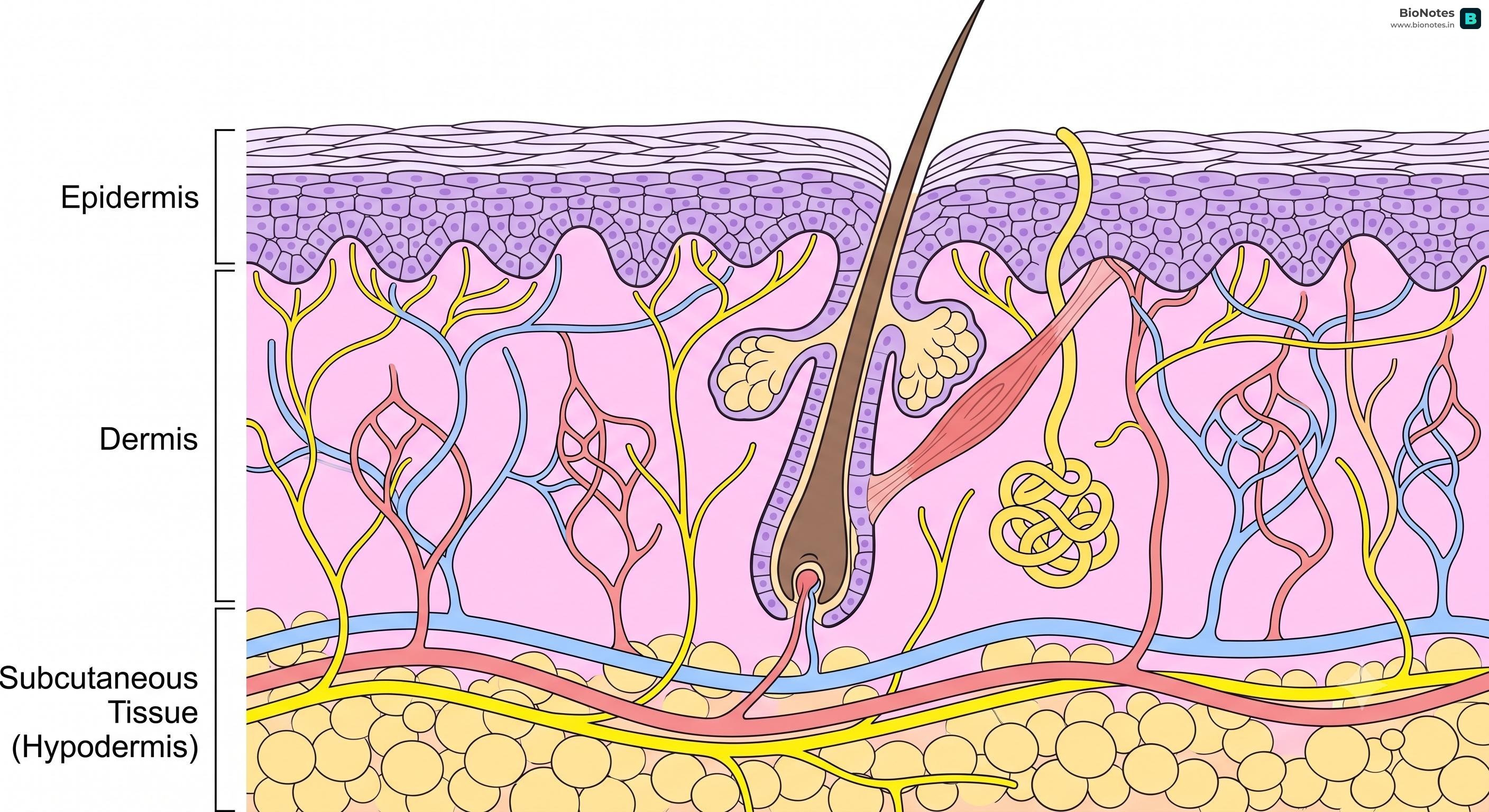 www.bionotes.in
Beyond the specific roles of its layers, the skin as a whole performs several critical functions:
The skin gives rise to several specialized structures, often referred to as appendages or derivatives, each with specific functions:
The skin plays a critical role in maintaining the body's core temperature (thermoregulation) through precise control of blood flow and sweat production. Two key mechanisms involving blood vessels are vasodilation and vasoconstriction:
Vasomotor Control Vasodilation and vasoconstriction are rapid physiological responses to temperature changes. Chronic failure of these mechanisms can lead to heatstroke or hypothermia.
These two processes work in conjunction with sweating and shivering to maintain the body's internal temperature within a narrow, optimal range, crucial for metabolic processes and overall health.processes and overall health.
NGSS-MS-LS1-3AQA-GCSE-4.5.2KS3-Biology